Buzzword or Breakthrough? What the Research Really Says About Full-Spectrum CBD

Walk into any CBD shop — physical or virtual — and you'll run into the phrase 'entourage effect' within about thirty seconds. It's on product labels, in brand emails, scattered across Instagram captions. The message is usually something like: all the plant compounds working together in perfect harmony to supercharge your wellness.
It sounds compelling. It also sounds a little too tidy.
Here at Nature's Garden CBD, we believe that being rooted in natural wellness means being rooted in honesty — including the kind of honesty that admits when the science is still catching up to the marketing. So let's take a hard, fair look at what researchers actually know about synergistic cannabis compounds, where the evidence gets shaky, and why the distinction still matters when you're choosing a product.
Where the Idea Actually Comes From
The term 'entourage effect' wasn't invented by a marketing team. It was coined by Israeli researchers Raphael Mechoulam and Shimon Ben-Shabat back in 1998. Their original work focused on how inactive lipid molecules in the endocannabinoid system appeared to boost the activity of active endocannabinoids — compounds your body produces on its own. The phrase was about endogenous chemistry, not cannabis products.
The concept got extended to cannabis in a 2011 paper by neurologist and researcher Ethan Russo, who proposed that the plant's cannabinoids, terpenes, and flavonoids might work together in ways that modify or amplify each other's effects. That paper — published in the British Journal of Pharmacology — is still the most-cited foundational text behind the marketing claims you see today.
Russo's hypothesis was thoughtful and genuinely interesting. It was also, importantly, a hypothesis. Not a proven mechanism. Not a clinical outcome.
What the Peer-Reviewed Evidence Actually Shows
Here's where things get more complicated than the average product page lets on.
Some research does support synergistic interactions between cannabis compounds. A 2020 study published in Cannabis and Cannabinoid Research found that a full-spectrum extract produced different — and in some measures, more favorable — outcomes than CBD isolate in certain preclinical models. A handful of other studies have shown that specific terpenes like myrcene, linalool, and beta-caryophyllene interact with the body's receptors in ways that could theoretically complement cannabinoid activity.
But 'theoretically complement' is doing a lot of heavy lifting in that sentence.
The honest scientific picture looks like this: most entourage effect research has been conducted in lab settings, on cell cultures or animal models. Human clinical trials examining the synergistic effects of whole-plant cannabis compounds are still limited. The studies that do exist often have small sample sizes, variable product formulations, and inconsistent methodologies — making it difficult to draw firm conclusions.
A 2019 review in Trends in Pharmacological Sciences specifically flagged this gap, noting that while there's biological plausibility for synergistic effects, the clinical evidence to confirm them in humans remains thin. That's not a dismissal of the concept — it's a call for more rigorous research.
How Brands Stretch the Science
None of this stops companies from presenting the entourage effect as settled fact.
You'll see language like 'scientifically proven synergy' or 'the power of the whole plant, clinically validated' attached to products where no clinical validation exists. Some brands cite Russo's 2011 paper as though it's the final word rather than an early framework. Others use the entourage effect to justify significant price premiums on full-spectrum products without any transparent explanation of what compounds are actually present or at what concentrations.
This isn't unique to CBD. The supplement industry broadly has a long history of outpacing its own evidence base. But CBD exists in a particularly murky regulatory space — the FDA hasn't approved it as a dietary supplement, and marketing oversight is inconsistent at best. That creates room for claims that would never survive scrutiny in a more regulated category.
As a consumer, you deserve better than that.
So Should You Write Off Full-Spectrum Products?
Absolutely not — and this is where critical thinking gets nuanced rather than cynical.
The absence of definitive clinical proof isn't the same as proof of absence. There are legitimate biological reasons to think whole-plant extracts behave differently than isolated compounds. The human endocannabinoid system is complex, and the idea that a single isolated molecule would capture everything a plant has to offer isn't especially convincing from a pharmacological standpoint either.
Many people who use CBD report meaningful differences between full-spectrum and isolate products — anecdotally, consistently, and across a wide range of wellness goals. Anecdotal evidence isn't clinical data, but it's not nothing, either. It's a signal worth paying attention to while the research matures.
What you can do is make smarter choices about how you evaluate products:
- Ask for a certificate of analysis (COA). Any reputable brand should provide third-party lab testing that shows exactly what cannabinoids and terpenes are present, and at what levels. If a company claims the entourage effect but can't tell you what's actually in the bottle, that's a red flag.
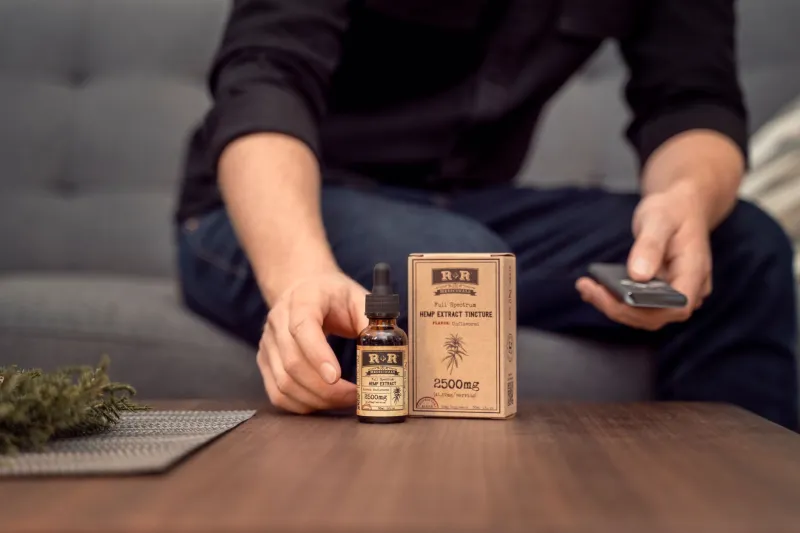
- Distinguish between 'full-spectrum' and 'broad-spectrum.' Full-spectrum contains trace amounts of THC (within federal limits of 0.3%). Broad-spectrum has had THC removed. Both contain multiple plant compounds, but they're not identical.
- Notice the language. Words like 'may support,' 'some research suggests,' or 'users report' are honest hedges. Phrases like 'clinically proven synergy' or 'scientifically guaranteed' should make you pause.
- Consider your own goals. For some people and some wellness applications, a high-quality isolate may work just as well — and cost less. There's no universal answer.
The Bigger Picture for Informed Shoppers
Being a thoughtful CBD consumer in 2024 means holding two things at once: genuine curiosity about what these plant compounds can do, and a healthy skepticism toward brands that claim more certainty than the science supports.
The entourage effect isn't a myth — the underlying biology is real and worth exploring. But it's also not a fully proven, clinically validated mechanism that automatically makes every full-spectrum product superior to every isolate. The truth lives somewhere in the middle, and that middle ground is where honest wellness conversations happen.
At Nature's Garden CBD, we'd rather give you the real picture than a clean marketing story. The research on cannabis synergy is genuinely exciting — it's also genuinely incomplete. And knowing the difference between those two things is exactly what puts you in the driver's seat when it comes to your own wellness choices.
Shop curious. Read labels. Ask questions. That's what rooting yourself in natural wellness actually looks like.