More Than the Sum of Its Parts: How Your CBD Works Harder When the Whole Plant Shows Up
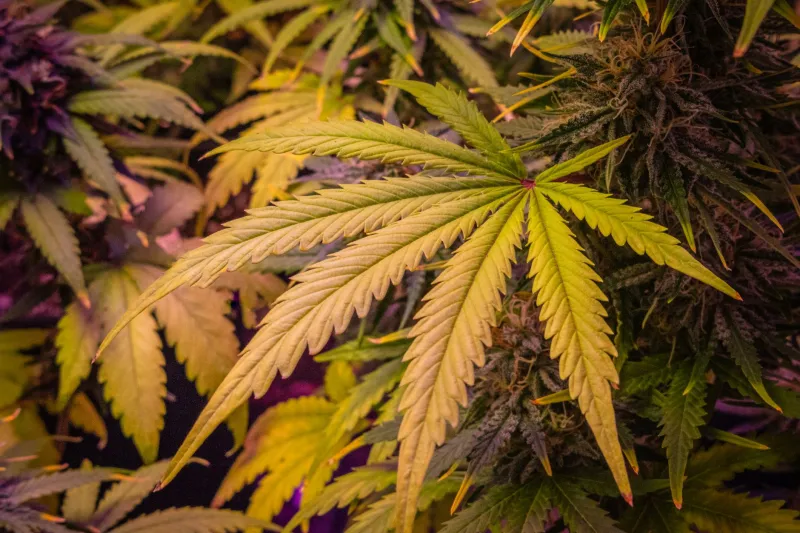
If you've spent any time shopping for CBD, you've probably noticed the labels: full-spectrum, broad-spectrum, isolate. Maybe you shrugged and grabbed whatever was on sale. Or maybe you went down a rabbit hole trying to figure out which one actually does something. Either way, you're not alone — and the distinction matters more than most product pages let on.
At the heart of it all is a concept called the entourage effect. It sounds like a Hollywood term, but it's actually a pretty fascinating piece of plant biology that could change how you think about your wellness routine.
What Exactly Is the Entourage Effect?
Here's the basic idea: cannabis and hemp plants are incredibly complex. They don't just produce CBD. They produce hundreds of different compounds — cannabinoids like CBG, CBN, and trace amounts of THC, plus aromatic molecules called terpenes, and a range of flavonoids and plant nutrients. Each of these compounds has its own relationship with your body's endocannabinoid system (ECS), the network of receptors that helps regulate everything from sleep and mood to inflammation and stress response.
The entourage effect is the theory — increasingly backed by research — that these compounds don't just work in isolation. They interact with each other, and with your body, in ways that amplify or modify the effects of CBD on its own. Think of it like a band versus a solo artist. A single guitar can make beautiful music. But add a rhythm section, some keys, and a vocalist, and suddenly you've got something that hits on a whole different level.
The term itself was first introduced by Israeli researchers Raphael Mechoulam and Shimon Ben-Shabat back in 1998. Their work suggested that the full chemical profile of the cannabis plant could produce effects greater than any isolated compound alone. That idea has been gaining traction in the scientific community ever since.
What the Research Actually Shows
Let's be real — the science here is still developing. CBD research broadly is still catching up to decades of federal restrictions that made it hard to study. But what we do have is genuinely interesting.
A 2011 review published in the British Journal of Pharmacology by neurologist Ethan Russo explored how terpenes and cannabinoids interact with each other in potentially meaningful ways. Russo argued that terpenes like linalool (also found in lavender) and myrcene (common in hops) may enhance CBD's calming properties, while limonene (think citrus peel) could support mood. These aren't just flavor molecules — they appear to have real physiological activity.
On the cannabinoid side, minor compounds like CBG (cannabigerol) have shown potential anti-inflammatory properties, while CBN (cannabinol) is being studied for its possible role in supporting sleep. When these show up alongside CBD in a full-spectrum product, they may contribute to a more rounded, effective experience — especially compared to a product that strips everything else away.
One particularly cited piece of evidence for the entourage effect comes from a 2015 study out of the Lautenberg Center for General Tumor Immunology in Jerusalem. Researchers compared a CBD isolate to a full-spectrum extract in addressing inflammation and pain. The full-spectrum extract outperformed the isolate — and notably, its effectiveness continued to increase with higher doses. The isolate, meanwhile, showed a bell-curve response, plateauing and then declining at higher doses. That's a meaningful difference if you're trying to dial in the right amount for your body.
Full-Spectrum vs. Broad-Spectrum vs. Isolate: Breaking Down the Difference
So what do those label terms actually mean?
Full-Spectrum CBD contains the complete range of cannabinoids, terpenes, and plant compounds found in hemp — including trace amounts of THC (legally capped at 0.3% in the US under the 2018 Farm Bill). That THC level is far too low to cause any psychoactive effect, but it may still contribute to the entourage effect.
Broad-Spectrum CBD is similar to full-spectrum but with the THC removed. It's a solid middle-ground option for people who want some of the entourage benefit without any THC in their system — which matters for folks who get drug tested for work or are particularly sensitive to THC.
CBD Isolate is pure CBD — nothing else. It's been refined to remove all other plant compounds. This can be useful for people who need a very precise dose or who have sensitivities to other cannabinoids, but it misses out on the synergistic benefits the other compounds may provide.
For most wellness-focused users, full-spectrum or broad-spectrum products are worth considering first, especially if you're looking for support with stress, sleep, or general balance.
Terpenes: The Unsung Heroes of Your CBD Product
Terpenes deserve a moment in the spotlight here because they're often overlooked on product labels. These are the aromatic compounds responsible for the distinctive smells of different hemp strains — earthy, piney, citrusy, floral. But they're not just about scent.
Research suggests terpenes interact with neurotransmitter systems and may cross the blood-brain barrier, potentially influencing mood and mental clarity. Some terpenes may even modulate how cannabinoids bind to your ECS receptors, essentially fine-tuning the experience. This is why two full-spectrum products with similar CBD content can feel noticeably different — their terpene profiles may be completely distinct.
When you're shopping for a full-spectrum CBD oil or capsule, it's worth looking for products that list their terpene content on the Certificate of Analysis (COA). A quality COA from a third-party lab should show not just cannabinoid percentages but also the terpene breakdown. That transparency is a good sign you're dealing with a brand that actually cares about the whole plant.
Why This Matters for Your Wellness Routine
At Nature's Garden CBD, we think about CBD the way we think about nutrition: whole foods tend to do more for your body than isolated supplements. A whole orange gives you fiber, flavonoids, and vitamin C in a form your body recognizes. A vitamin C tablet gives you one thing, separated from its natural context.
Full-spectrum CBD is the whole orange.
That doesn't mean isolates are useless — they have their place, especially for people with specific needs or sensitivities. But if you're starting out or trying to get more from your current routine, a high-quality full-spectrum product is worth exploring.
Look for products with transparent lab testing, clear terpene profiles, and hemp sourced from reputable US farms. The 2018 Farm Bill opened the door to a lot of hemp cultivation across states like Colorado, Oregon, and Kentucky — and quality domestic hemp tends to come with better traceability.
The Takeaway
The entourage effect is one of those concepts that makes intuitive sense once you hear it: nature built this plant as a system, and that system may work better intact. Full-spectrum CBD respects that design. It brings cannabinoids, terpenes, and plant compounds together in a way that may support your endocannabinoid system more effectively than a single isolated molecule ever could.
Is the science complete? Not yet. But what we know so far points in a pretty clear direction — and if you've ever felt like your CBD wasn't quite doing what you hoped, it might be worth asking what else was (or wasn't) in the bottle.