Clock In, Dose Right: Using Your Body's Natural Rhythms to Get More From CBD
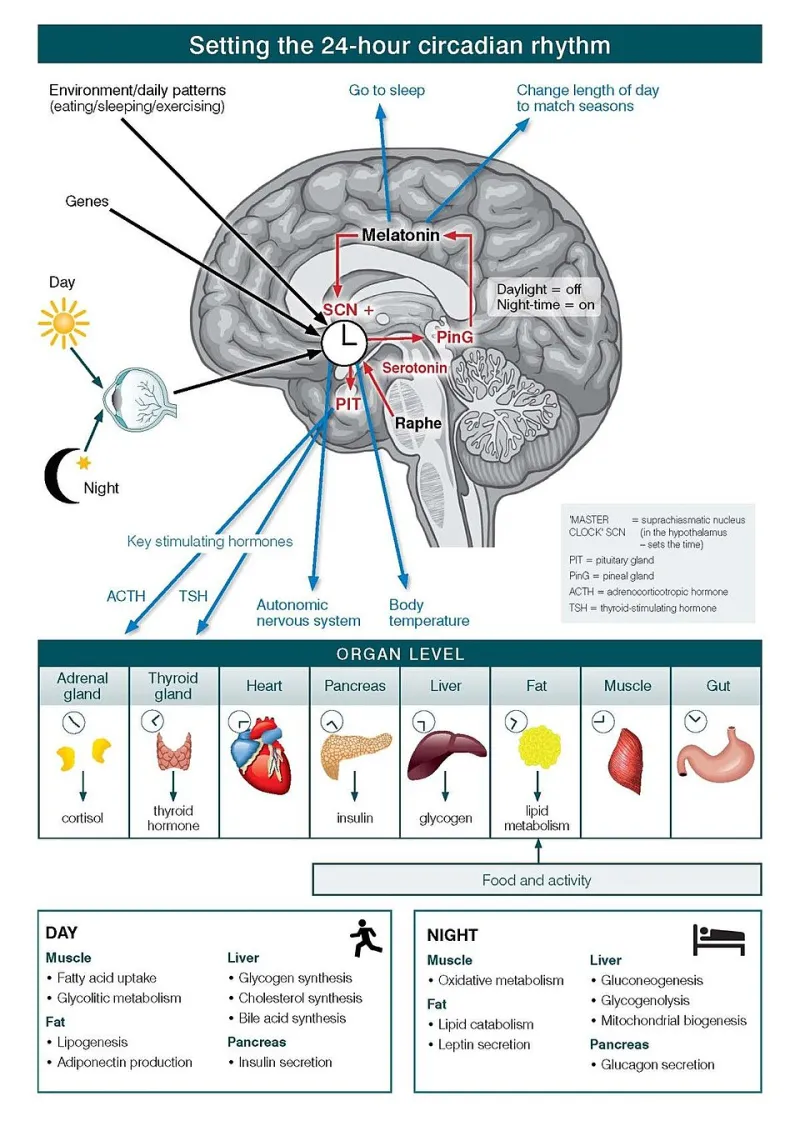
Photo: Ian B Hickie, Sharon L Naismith, Rébecca Robillard, Elizabeth M Scott, and Daniel F Hermens, CC BY 3.0, via Wikimedia Commons
You probably already know that taking melatonin at 2pm is a bad idea. Or that drinking coffee right before bed is asking for trouble. These aren't just common sense observations — they're examples of chronobiology in action. Your body operates on a tightly orchestrated 24-hour schedule, and almost every physiological process, from hormone secretion to immune function to digestion, follows that rhythm.
So why do most people treat CBD like it exists outside of time?
The truth is, when you take CBD may matter as much as how much you take. Understanding a little bit of circadian biology can transform a haphazard supplement habit into a genuinely strategic wellness practice.
Your Body's Internal Clock: A Quick Primer
The circadian rhythm is essentially your body's master scheduling system. It's regulated by a cluster of neurons in the brain called the suprachiasmatic nucleus (SCN), which responds to light cues and keeps your internal clock synced to the external day-night cycle.
This clock drives predictable daily fluctuations in cortisol, melatonin, adenosine, body temperature, and dozens of other biological markers. When your timing is aligned with these natural patterns, everything from energy to sleep to mood tends to work better. When it's not — hello, jet lag, shift work, or late-night scrolling — things go sideways.
Here's where CBD enters the picture: your endocannabinoid system (ECS) is deeply intertwined with circadian regulation. CB1 and CB2 receptors, which CBD interacts with indirectly, show daily fluctuations in expression and sensitivity. The ECS also influences the release of sleep-related compounds and stress hormones. In short, the ECS doesn't operate the same way at 7am as it does at 10pm — and neither should your CBD dose.
The Morning Window: Cortisol, Clarity, and Getting a Running Start
For most people, cortisol peaks within the first hour of waking. This is called the cortisol awakening response (CAR), and it's actually a healthy, intentional spike that primes your brain for alertness and prepares your immune system for the day ahead.
Here's the counterintuitive part: taking CBD during this peak cortisol window might actually blunt the natural awakening response you need. Some research suggests CBD can modulate cortisol secretion, which is great when cortisol is chronically elevated — but potentially counterproductive first thing in the morning when that spike is doing useful work.
If you're using CBD for daytime stress management or focus, consider waiting until 90 minutes to two hours after waking before your first dose. By that point, the CAR has done its job and cortisol is beginning its natural decline toward midday. A moderate CBD dose at this point can help smooth out the stress curve without interfering with your morning energy.
Best for morning use: Lower to moderate doses; combine with L-theanine if you need sustained focus.
The Afternoon Slump: Adenosine and the 2pm Wall
If you've ever hit that wall somewhere between 1pm and 3pm, you've experienced adenosine at work. Adenosine is a sleep-promoting compound that builds up in your brain throughout the day — the longer you're awake, the more it accumulates, and the more pressure you feel to rest.
Caffeine works by blocking adenosine receptors, which is why it temporarily overrides that afternoon fatigue. CBD, interestingly, doesn't block adenosine — but it may influence how your body processes it. Some early research points to CBD's interaction with A2A adenosine receptors, which play a role in inflammation and neuroprotection. The practical implications are still being studied, but many users report that a small afternoon CBD dose helps them stay calm and clear without the jittery edge of another cup of coffee.
This is particularly relevant for people whose wellness goals include managing afternoon anxiety or maintaining cognitive function through the workday.
Best for afternoon use: Small to moderate dose; avoid high doses if you need to stay alert through the evening.
The Evening Wind-Down: Melatonin, Temperature, and Sleep Prep
This is where most CBD users are already focused — and for good reason. The hours between roughly 7pm and 10pm represent a natural biological shift toward sleep preparation. Body temperature starts to drop, melatonin production ramps up (assuming you're not staring at bright screens), and the nervous system begins transitioning from sympathetic (action-oriented) to parasympathetic (rest-and-digest) dominance.
CBD can support this transition meaningfully. Its anxiolytic properties may help quiet the mental noise that keeps people awake, while its potential influence on GABA activity promotes physical relaxation. Taken one to two hours before your intended sleep time, CBD has a reasonable window to metabolize and begin working as you're winding down.
One thing to avoid: taking a large dose right at bedtime and expecting immediate results. CBD is not a sedative. It works more gradually, supporting the conditions for sleep rather than forcing it. Give it time to do its job.
Best for evening use: Moderate to higher dose; pair with magnesium for enhanced relaxation; dim lights and reduce screen time to let melatonin do its part.
Your Chronotype Changes the Equation
Not everyone's internal clock runs on the same schedule. Chronotypes — your natural tendency to be a morning person, a night owl, or somewhere in between — shift your entire hormonal rhythm forward or backward by several hours.
If you're a genuine night owl, your cortisol peak might not arrive until 9am or 10am. Your natural melatonin onset might be closer to midnight. Applying a morning-person dosing schedule to a night-owl biology is going to produce different results than you'd expect.
The practical takeaway: pay attention to your own energy patterns, not just the clock on the wall. When do you naturally feel most alert? When does your energy reliably dip? When do you start feeling sleepy? Map your CBD timing to those personal rhythms rather than following generic advice.
Tracking Makes the Difference
Circadian optimization isn't a one-size-fits-all formula — it's an experiment with a sample size of one. The most useful thing you can do is keep a simple log for two to three weeks: note what time you took CBD, what dose, what your energy and mood were like, and how your sleep went.
Patterns will emerge. You'll start to see which timing windows work best for your specific goals and your specific biology. That's information no article can give you outright — it has to come from paying attention to your own body's schedule.
Time, it turns out, is one of the most underrated variables in your CBD routine.